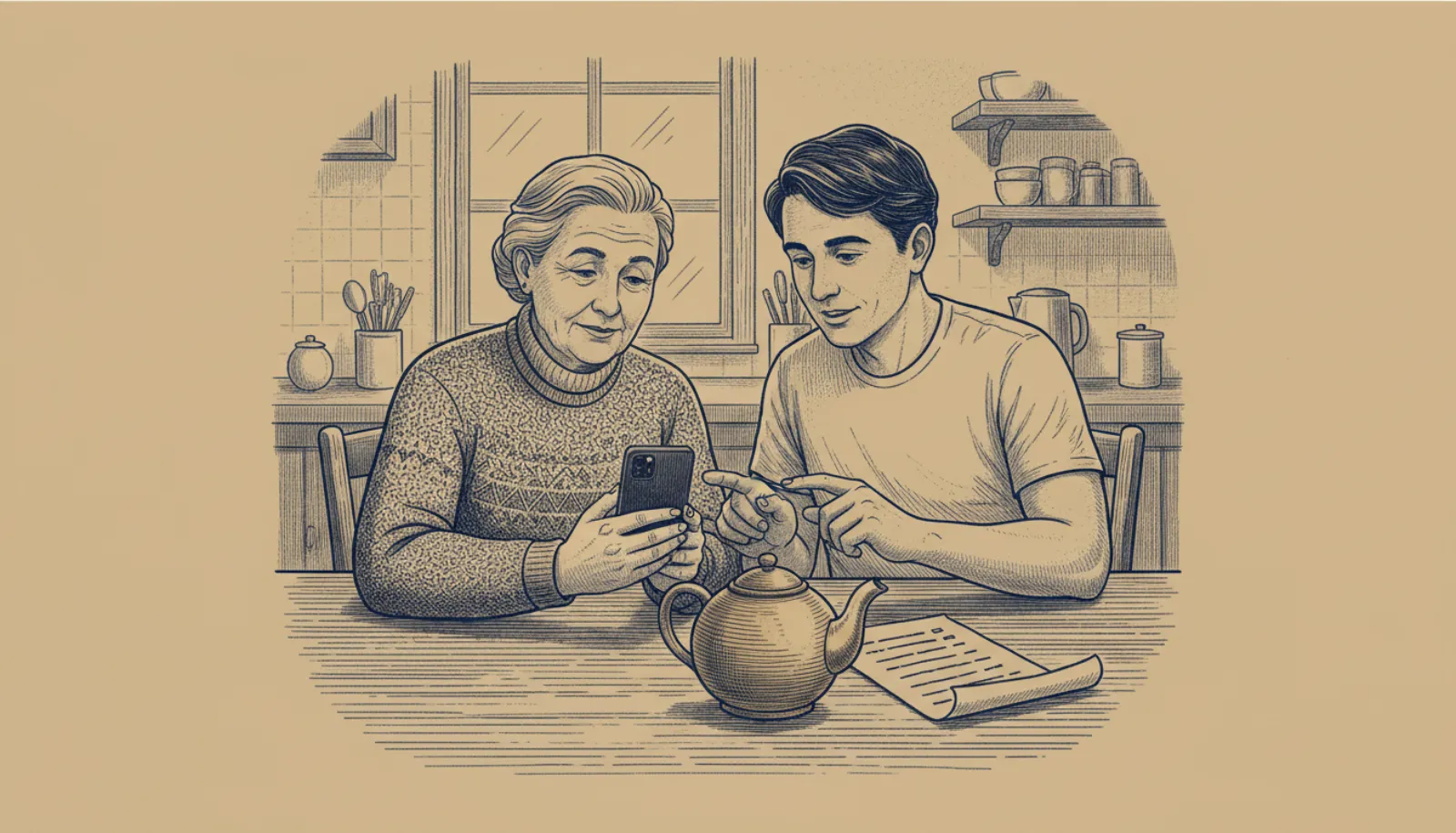
For most teens, the answer is no, and not only because of safety: the major personal AI agents are adults-only under their own terms. Meta Muse, Claude Duet and Gemini Spark all require users to be 18 or older. That is a sensible line, because an agent can send messages, sign up for services and spend money on your behalf, which raises the stakes well above a chatbot answering homework questions.
What are the age limits for personal AI agents?
| Agent or app (as of November 2026) | Minimum age | Source |
|---|---|---|
| Meta Muse | 18, or the age of majority | Meta help centre |
| Claude Duet (Claude consumer plans) | 18, or the minimum age to consent | Anthropic consumer terms |
| Gemini Spark | 18+ | Google, via our verified notes |
| Gemini app (personal account) | 13, or the local age | Google support |
| OpenAI dots | Not separately published | OpenAI's general terms: 13+, parental permission under 18 |
| Grok Bot | Not stated in the FAQ | xAI FAQ |
| OpenClaw | None (self-hosted software) | MIT-licensed open source |
Two caveats. First, our fetcher couldn't load OpenAI's terms directly, so the 13+ figure is from the published terms as indexed, and it covers ChatGPT generally rather than dots specifically. Second, dots requires a paid ChatGPT Pro plan ($100, $200 or $500 a month) or Business Premium ($100 per user per month billed annually, $125 monthly), which in practice means an adult paying.
Why are agents riskier for teens than chatbots?
A chatbot produces text. An agent takes actions with your accounts. That difference changes what can go wrong.
- Teen asks agent
- Agent reads email or web
- Agent acts on accounts
- Money spent or messages sent
- Spending. Agents can buy things. Muse and Duet ask before every purchase, but a teen approving quickly on a phone is the weak point. See what to do after an unapproved purchase.
- Manipulation. Agents read untrusted content: emails, web pages, group chats. Hidden instructions in that content can steer the agent, which is called indirect prompt injection. Teens are also frequent targets of social-engineering scams by text; see the AI text scams guide on SMS AI Agents.
- Oversharing. Agents with memory keep what they learn. dots doesn't let you view or edit individual memories, and Duet keeps data until you delete it. Our guide to what not to tell an AI agent applies doubly to teens.
- Other people's data. An agent connected to a teen's messages also reads their friends' messages. See AI agents and other people's data.
What do US rules say about children and AI?
There is no US federal law specific to AI agents. Several existing rules matter for families. Our overview of US AI agent rules has the full picture.
- FTC finalizes COPPA amendments: separate parental consent before sharing kids' data with third parties
- FTC sends 6(b) orders to seven AI chatbot companies about effects on children and teens
- California signs SB 243 on companion chatbots
- Most SB 243 duties take effect
- COPPA covers children under 13. The FTC's January 2025 amendments require separate parental consent before sharing children's data with third parties and limit how long it can be kept.
- The FTC's 6(b) inquiry, launched 11 September 2025, asked Alphabet, Character.AI, Instagram, Meta, OpenAI, Snap and xAI how they "measure, test, and monitor potentially negative impacts of this technology on children and teens" (FTC). A 6(b) study is research, not an enforcement action.
- California SB 243 applies to companion chatbots. According to the Future of Privacy Forum's analysis, it requires disclosure that companion chatbots may not suit some minors and, where the operator knows a user is a minor, AI disclosure and break reminders. Whether it reaches task-oriented agents is not settled.
What can parents do instead?
- Keep the agent on the adult's accountUse it for family logistics like calendars, school forms and errands.
- Don't connect the teen's accountsTheir email, messages and payment cards stay off the agent.
- Use age-appropriate chatbotsPick a chatbot that allows their age, with family settings turned on.
- Talk about approvals and scamsExplain why to pause before tapping Approve or paying.
- Review togetherLook at what was done and spent once a week.
A parent running an agent on their own account is within the vendors' terms. Keep approvals on for anything that sends, pays or deletes, and see our family and older relatives guide for shared-household guardrails. The general safety checklist applies too.
What if your teen is already using an agent?
Stay calm and start with a conversation rather than a ban. Ask which agent they use, which accounts it can reach and whether a card is saved. Then take the practical steps:
- Check the account holder. If the teen signed up below the vendor's minimum age, the account breaks the terms, and the vendor may close it. Downloading their data first is sensible.
- Remove payment methods. Take saved cards off the agent and the linked account, and turn on transaction alerts for any card they use.
- Revoke connectors. Disconnect email, messaging and school accounts. Our guide to revoking agent access covers each agent.
- Clear memory. Agents can remember personal details from past chats. See deleting agent memory.
If you find signs of contact from a stranger, sextortion or a scam, save the evidence and contact the police. In the US you can also report to the NCMEC CyberTipline or IC3.
Bottom line
Personal AI agents are adult products by their own rules, and the reasons are sound: they hold real access to accounts and money. For under-18s, a supervised chatbot that allows their age is the better fit. When the teen turns 18, start them with read-only access, no saved debit card, and approvals on.