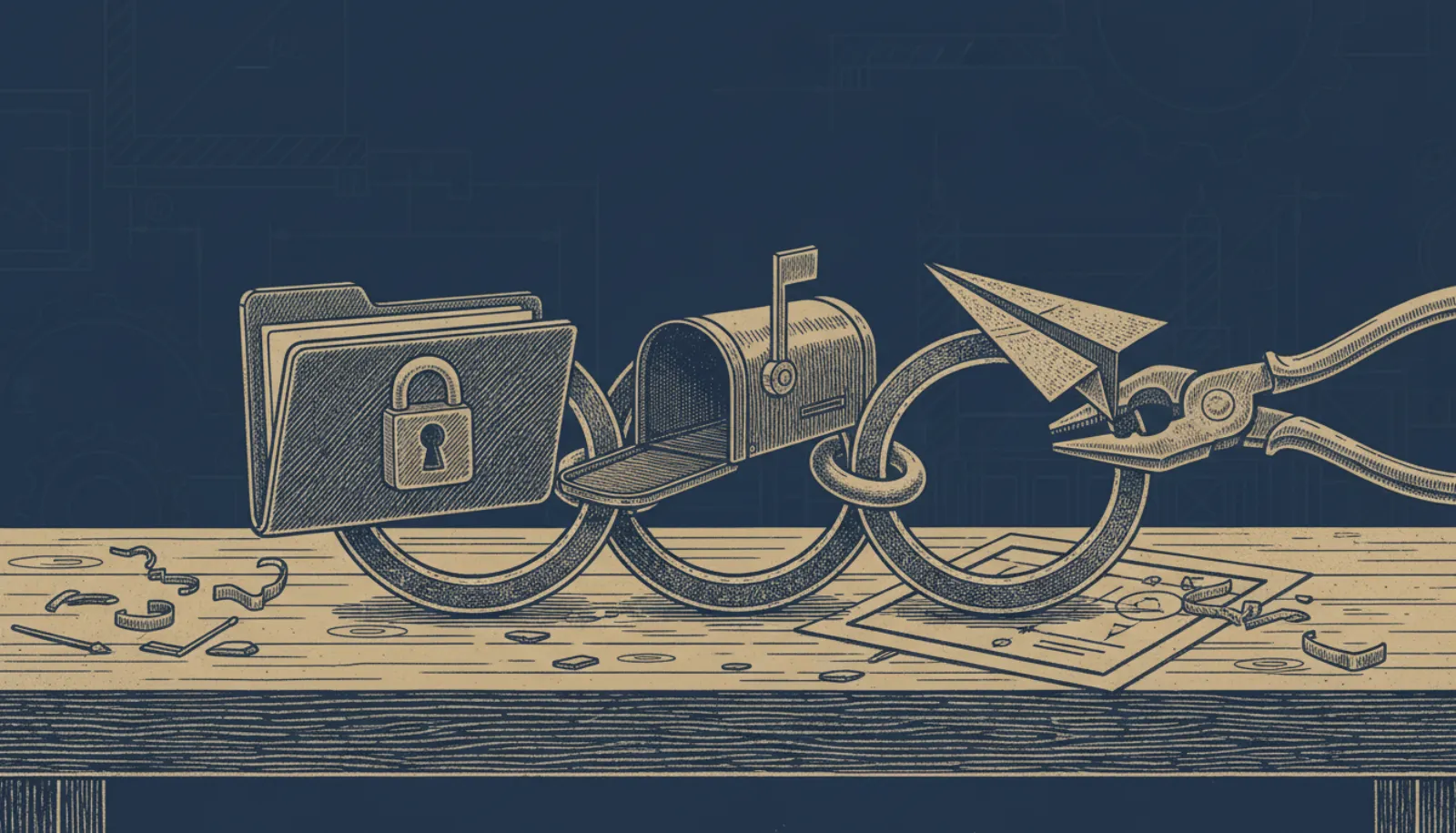
The "lethal trifecta" is a simple test for whether an AI agent can be tricked into leaking your data. If an agent has access to your private data, reads content from untrusted sources, and can send information out, an attacker who gets text in front of it can try to make it exfiltrate that data. Take away any one of the three, or put a human check on the outbound step, and the attack stops working.
The term comes from developer and security writer Simon Willison, who published it on 16 June 2025. It has since become a common shorthand in agent security discussions.
What are the three legs of the trifecta?
Willison's definition, in his words:
- "Access to your private data"
- "Exposure to untrusted content"
- "The ability to externally communicate in a way that could be used to steal your data"
His point: when an agent combines these, "an attacker can easily trick it into accessing your private data" and sending it somewhere.
- Private data (inbox, files)
- Untrusted content (email, web page)
- Hidden instruction
- Outbound channel (email, link, API)
- Attacker
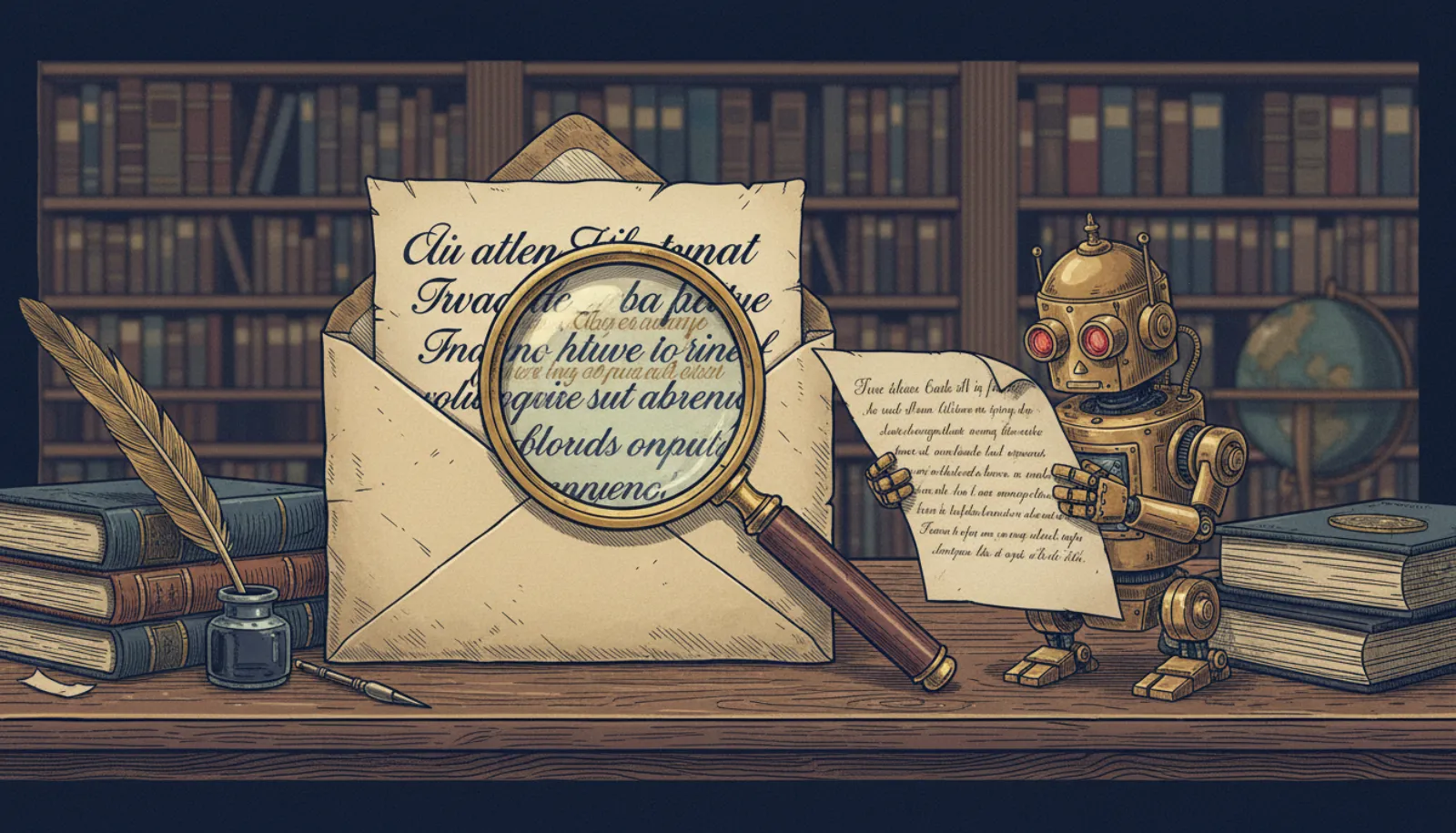
The middle step is indirect prompt injection: text in an email or page that the model treats as an instruction. The outbound channel does not have to be obvious. Willison's list of past exfiltration bugs includes cases where data left through an image URL or a link the agent rendered, not a sent email.
Why do personal agents almost always have all three?
Personal agents are useful precisely because they combine the three legs. An agent that triages your inbox has private data and untrusted content in one place. If it can also reply, forward, browse or call a connector, it has the outbound leg too.
| Typical task | Private data | Untrusted content | Outbound access |
|---|---|---|---|
| Summarise my inbox | Yes | Yes (any sender) | Only if it can reply or browse |
| Book a restaurant | Calendar, contacts | Restaurant web pages | Booking forms, email |
| Research a purchase | Saved cards, address | Shopping sites, reviews | Checkout |
| Reply to texts for me | Message history | Anyone who texts you | Sending replies |
| Run a self-hosted agent with MCP tools | Local files, tokens | Tool output, web | Any tool that writes |
Willison warns that the last row is the hardest: "once you start mixing and matching tools yourself there's nothing those vendors can do to protect you." That applies to MCP connectors and to self-hosted agents like OpenClaw.
How do vendors try to break the triangle?
None of the big four removes a leg entirely, since that would make the agent much less useful. Instead they police the outbound step. Each claim below comes from the vendor's own documentation.
- Meta Muse routes every action through Sentinel, a separate component on the host side: "Muse proposes actions, but only Sentinel can grant permission." Meta says Sentinel also governs network egress and that human approval is required for actions that move data out of the agent's VM (Meta).
- Claude Duet shows "the action, the destination, and the content, including every recipient" before sending, paying or deleting, and runs an action check outside the working model (Anthropic).
- OpenAI dots keeps proactive research read-only, which removes the outbound leg while the agent works unprompted. It also runs Auto-review of planned actions. The read-only rule was reported by VentureBeat and Auto-review by eesel, which also reports that password changes and money transfers always return to you.
- Grok Bot lets you add "Ask first" rules for sending, publishing, deleting and purchasing. Its FAQ warns that all of your Bots share one cloud computer: "Do not use separate Bots as a security boundary" (xAI).
Can guardrails or filters solve it instead?
Not on their own. Willison's blunt assessment: "we still don't know how to 100% reliably prevent this from happening." He notes that guardrail products often claim to catch "95% of attacks", and in security 95% is "very much a failing grade", because attackers retry until something works.
The vendors agree in their own words. Meta calls prompt injection "an open problem in the industry." Anthropic reported a 1.4% attack success rate for Claude Opus 4.5 with safeguards in browser use and said that "still represents meaningful risk." The OWASP Top 10 for Agentic Applications (December 2025) lists Agent Goal Hijack as ASI01, its top risk. Explainers on OWASP's agentic list and government guidance cover the frameworks.
How do you break the trifecta yourself?
Pick a leg per task and cut it.
- Cut outbound accessGive read-only access when you only need summaries or research.
- Cut untrusted contentKeep sessions that touch bank, health or work data separate from open web browsing and unknown senders.
- Cut private dataUse a fresh, disconnected session for research on untrusted sites.
- Gate what is leftRequire one-time approval for every send, share, upload or payment, and read the destination.
Practical examples
- Inbox triage. Connect email with read access only and ask for a summary. Write the replies yourself or approve each one. See read-only vs send access.
- Shopping research. Let the agent browse and compare, but keep checkout behind an approval and a single-use card. Our money and payments guides cover the details.
- Self-hosted agents. Do not give one OpenClaw agent your files, a web browser and an outbound email tool at the same time without approvals. The OpenClaw hardening checklist shows how to scope tools per agent.
Joint guidance from Five Eyes cyber agencies, Careful Adoption of Agentic AI Services (May 2026), makes the same point for organisations: "strict adherence to the principle of least privilege is critical." It is written for businesses, but the logic applies to a personal account too. Our page on least privilege for AI agents applies it to home use.
Bottom line
The lethal trifecta is the most useful single idea for judging agent risk. Before you connect a new account or tool, ask three questions: does the agent see something private, does it read anything a stranger could write, and can it send anything out? If all three answers are yes, make sure a human approval sits on the outbound step, or split the task so they are not.